

A weekend sprint for scientists, engineers, designers and founders exploring biomaterials, manufacturing and scalable production.


Build the Next-Generation of Materials and Manufacturing

MaterialHack: A London Hackathon for Biomaterials and Manufacturing Abundance
Delivered by Nucleate UK and powered by ARIA, MaterialHack is a London-based hackathon taking place from the 26th to the 28th of June 2026. We are bringing together scientists, engineers, designers and founders to explore biomaterials, biomanufacturing and scalable production. Applications close on the 15th of June
The Problem Space
The Problem Space
MaterialHack brings together an interdisciplinary community focused on designing the next generation of bio-materials and bio-manufacturing. Powered by ARIA’s Manufacturing Abundance Opportunity Space, this hackathon invites participants to rethink advanced materials and manufacturing through biology; potentially unlocking more robust, scalable, and sustainable approaches to how we produce, recover, and work with high-impact materials. Whether you’re driven by bold ideas or data-driven discovery, you can choose where to focus:
AI
The AI Track explores how proteins can be designed to interact with inorganic materials, specifically metals. Participants will use AI tools and provided datasets to investigate novel protein–metal interactions.
This track focuses on the design of protein–metal interactions and hybrid bio-metal systems for critical mineral recovery and advanced metal-based materials at the intersection of biology and materials science.
-
How can we accurately predict protein behaviour in extreme environments?
-
Can we enhance metal binding properties of proteins by de novo design?
-
What metal-relevant industrial processes would benefit from proteins?
Blue Sky
The Blue-Sky Track focuses on adaptable manufacturing, especially in the context of waste valorisation. Most manufacturing systems rely on predictable inputs. But waste-streams are varied and inconsistent.
This track focuses on the design of adaptive processes that can handle inconsistent waste and transform it into reliable, high-value outputs.
-
Can we design novel high-throughput ways to characterise waste feedstocks?
-
Can we identify the ideal biosynthetic targets based off of mixed waste streams?
-
In order to decentralise biomanufacturing, we need to understand the global distribution of waste feedstocks. Can this be systematically done?
-
How can we ensure microbes can be robust to diverse inputs?
-
Can we re-design bioreactors to be better suited for multi-input sources and waste streams?
Agenda
Friday / 26th
Team Formation Social
Meet fellow participants, form teams, and settle in over food and drinks.
Saturday / 27th
Full Day of Hacking
Develop your concept, test ideas, and build with guidance from our mentors.
Sunday / 28th
Pitches and Judging
Refine your idea, present to peers and judges, and compete for prizes.
Track Partners

Our Problem Spaces were developed in collaboration with Homeworld Collective and Twig Bio



Our Blue Sky Track is sponsored by TuringDB

Access to TuringDB's high-speed graph database and hands-on mentor support
Mentors and Judges

Julian Englert
Adaptyv Bio

Katie Pfieffer
Loughborough University

Kelvin Degbotse
Founders Factory
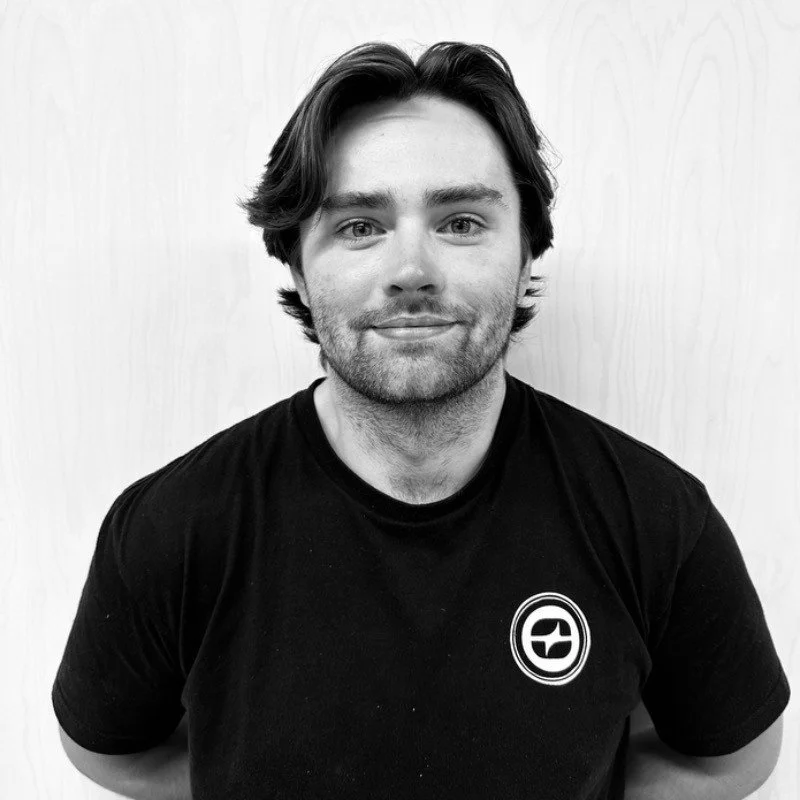
Fiachra Sweeney
Nucleate UK

Kepa Burusco Goñi
CCDC

Sonja Billerbeck
Imperial College

Laurence Legon
Twig Bio
Joe Price
Evolutor

Wojtek Treyde
Oxford / CompMotifs
Imperial College / In Silico
Jakub Lála